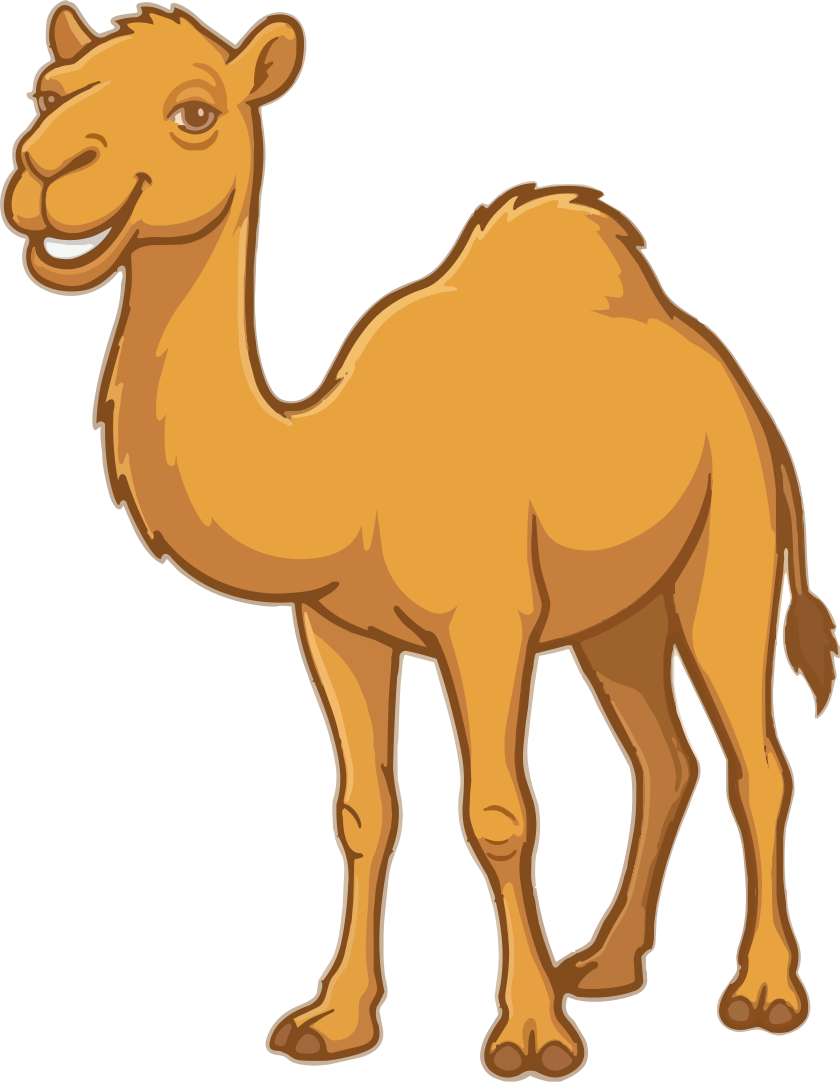
 Why are people “worth” camels?
The “how many camels are you worth” joke didn’t come from nowhere. It stitches together a few real threads of history into one very online punchline.
See your camel score →Camels were once serious wealth
For centuries camels were among the most valuable things a person could own across Arabia, the Sahara and the Horn of Africa: transport, milk, meat, hair, and a portable store of wealth along trade routes like the Silk Road. Counting value "in camels" was simply counting in the era’s hard currency.
They earned that status by being almost unfairly well adapted, going over a week without water, tolerating body temperatures up to 41 C before sweating, and crossing terrain nothing else could.
From bride price and blood money to a meme
Two real customs feed the joke. The first is livestock bride price, still seen in parts of East Africa, where camels or cattle pass between families to mark a marriage. The second is the Islamic diya, the compensation for a life, traditionally set at 100 camels.
Both attach a striking number of camels to something human and momentous, a marriage or a death, which is exactly the kind of vivid, slightly shocking image the internet loves to flatten into a punchline.
How it went viral
Jokey "how many camels for your wife" calculators have floated around the web for years, but the format exploded as a TikTok trend around 2020, often as a quiz or filter you ran on a partner for laughs. From there it spread far beyond any of the cultures it borrowed from.
Part of the appeal is how shareable the result is: a single funny number you can post or compare. Spin-offs swap in other livestock too, which is why you will also find sheep and goat versions of the same gag.
Why the image still resonates
Camels remain a symbol of wealth and status in the Gulf, where champion racers sell for millions and festivals pay out vast prizes. That living prestige is part of why "worth in camels" still lands as a punchline.
It is a joke with deep roots, but a joke all the same: people cannot really be priced, in camels or anything else.
A joke worth handling with care
Because the gag leans on real customs and real religious texts, it is easy to get the facts wrong or to sound like you are mocking the people who practise them. We try to keep the humour pointed at the absurd premise, not at any culture.
So enjoy your camel score for what it is: a silly number from a photo and a few questions. The history behind it is genuinely interesting, and worth getting right, but no one is actually for sale.
Frequently asked questions
Where did "how many camels am I worth" come from?
It is an internet joke inspired by real history, camels as wealth, livestock bride price, and the 100-camel diya, turned into a viral TikTok trend around 2020.
When did the camel calculator trend start?
Joke versions existed for years, but it took off as a TikTok quiz and filter around 2020 and spread well beyond the cultures it borrowed the imagery from.
Is there any real way to value a person in camels?
No, it is entirely for fun. The customs it references are about marriage and compensation, not putting a price on a human being.
Why were camels so valuable?
They provided transport, milk, meat and hair, survived extreme deserts, and were a portable store of wealth, so they worked as currency.
Why are there sheep and goat versions too?
Because the joke travels: any animal that once counted as wealth works as the unit, so spin-offs swap camels for sheep or goats while keeping the same gag.
Are camels still valuable today?
Very, in the Gulf, where racing and beauty-contest champions sell for millions and festivals pay out enormous prizes.